
Why mess with perfection?
Gustav Mahler might be accused of just that by fiddling with Beethoven’s iconic Symphony No. 5, a version given its first-ever Florida Orchestra performances under the baton of Music Director Michael Francis in his 10th-anniversary season.
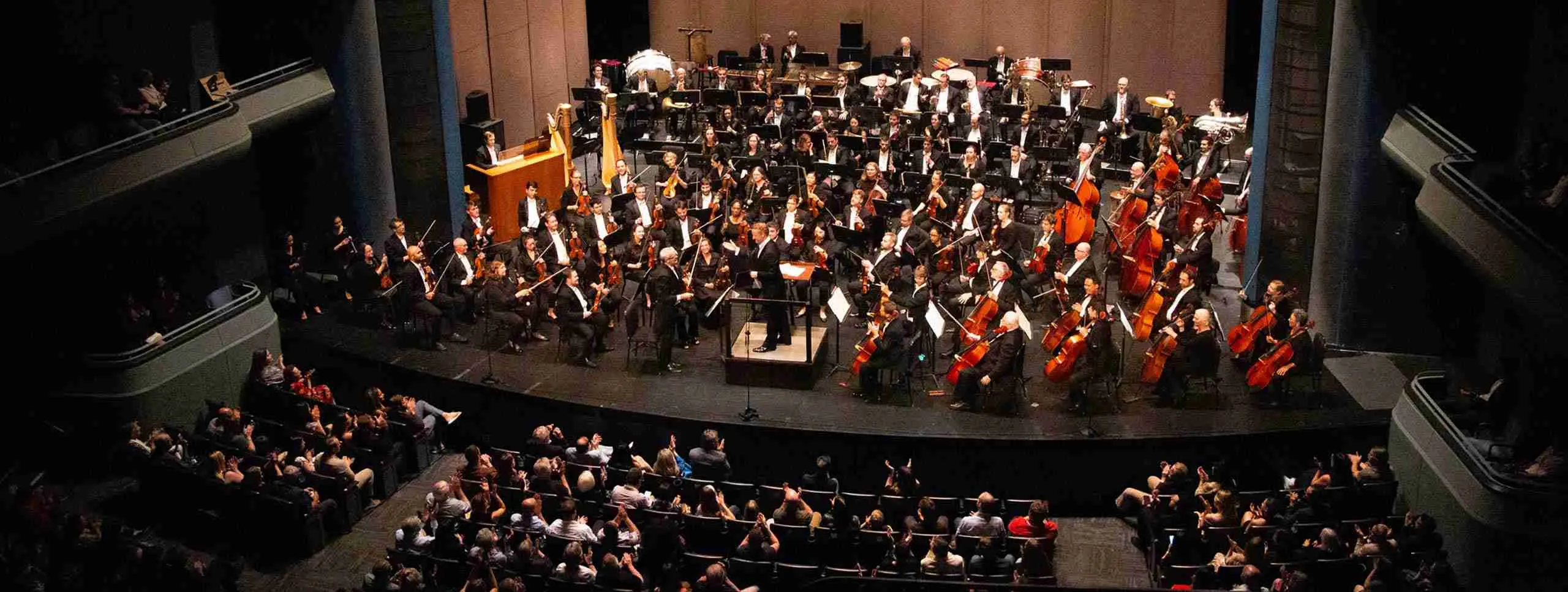
For this Hough Family Foundation Masterworks program, listeners filled the halls in Tampa, St. Petersburg and Clearwater over the weekend to hear an augmented account of the world’s most famous symphony, which Mahler – the celebrated Austrian composer and conductor – expanded by adding more instruments to the mix.
But why would he do such a thing? Isn’t the Fifth immutable?
“It’s like the symphony is in Technicolor,’’ Frances said. “It’s bigger, bolder and louder than the original.’’
Mahler’s premise wasn’t to reconstruct a work that turned the music world on its head 216 years ago. He wanted to dress it in fin-de-siècle clothing, adapting it to new and improved instruments, larger orchestras and concert halls of a century later. He did the same with the composer’s Third, Seventh and Ninth symphonies and the Coriolan Overture, saying that his dabblings are “ in no way a case of re-instrumentation or alteration, let alone improvement of the work of Beethoven.’’
So, we settled in Saturday night at Mahaffey to hear this hybrid, with curious listeners wondering how “big’’ it would sound clad in instrumental doublings.
The famed first movement got off on its four-note fusillade as soon as Francis arrived at his station, the ensembles sounding natural, not remade or amplified. The differences between this and TFO’s 2021 performance of the original symphony were subtle, and by the variations of the andante, almost negligible. But soon, richer colors emerged − especially in the finale’s stirring transition from darkness to light – the bolstered rank of flutes, horns, and E-flat clarinet adding sonority to Beethoven’s voice.
Prior to intermission, the orchestra offered the latest of its “mystery’’ pieces, works announced just before their performance: an expansive and warm-hearted rendering of Richard Wagner’s Overture to Die Meistersinger von Nürnberg.
The concert opened with Richard Strauss’ Also sprach Zarathustra, the sprawling tone poem known to millions from the movie 2001: A Space Odyssey. Strauss composed Zarathustra in 1896 as a musical response to a work of philosophical fiction by Friedrich Nietzsche, and from his perch on the proscenium, Francis briefed listeners on its eight episodes, from Dwellers of the World Beyond to the Night Wanderer’s Song.
Zarathustra began ominously with a low growl of organ, cellos and basses before a brass fanfare ascended in the famed three-note octave in the bright key of C major. Francis’s affinity for the piece was evident at the onset, stabbing the air with animated aplomb, at one point conducting so vigorously it seemed he might dislocate a shoulder.
Such zeal seems fitting, as he chose Zarathustra for his first appearance as a guest conductor for TFO in 2013, and within a year the board tagged him as their top guy. A decade at the helm – a coveted stretch for any music director – promises plenty of harmony in the seasons ahead.


